
Rwanda – Proof That God Rewards Forgiveness
When most people hear that name, they think in extremes. Either the horror of 1994 — more than 800,000 people slaughtered in about 100 days while the world looked the other way. Or the Rwanda of today — one of the cleanest countries in the world, one of the safest countries in the world, disciplined, orderly, and surprisingly future-focused.
But when I look at Rwanda, I see something deeper. I see a country that proves that God rewards forgiveness.
In 1994, Rwanda became a global symbol of just how dark the human heart can get. Neighbors turned on neighbors. People were hunted in churches, schools, and stadiums where they thought they would be safe. Bodies lined the roads and clogged the rivers. Somewhere between a quarter and half a million women were raped, many intentionally infected with disease as a weapon. More than two million people fled into neighboring countries, carrying trauma with them.
By any human logic, what should have followed was endless revenge. Killings answered by more killings. Children raised on stories of hate. A country frozen in bitterness, payback, and fear.
But that’s not the road Rwanda chose.
After the genocide, the new leadership faced a brutal question: Do we build our future on vengeance, or do we attempt something far more difficult — justice, discipline, and forgiveness woven together?
They chose the harder way. They created community courts called Gacaca because the formal justice system simply could not handle the scale of what had happened. Over time, more than a million genocide-related cases were heard in these local courts. Survivors stood up and told the truth about what they had seen and suffered. Perpetrators stood up and confessed what they had done. Some went to prison. Some did community service. Some were released back into the same villages where they had once committed violence.
It was messy. It was painful. It was not perfect. But it was a kind of justice that made room for a future instead of locking the country into permanent war.
They also changed the narrative around identity. The labels “Hutu” and “Tutsi” — the same labels that had been weaponized into slaughter — were no longer centered in public political life. Instead, a new declaration was lifted up: “We are all Rwandans.” The nation chose a shared identity over the divisions that had once justified murder.
And then there was the world. The same international community that held meetings, issued statements, and debated definitions while people were dying in churches and fields was not shut out forever. Rwanda did not retreat into permanent suspicion and isolation. Instead, it became one of the most open and welcoming countries in its region to tourists, investors, and visitors. Where many might have said, “We will never trust you again,” Rwanda said, in effect, “Come and see what we are building now.”
That is forgiveness in motion. Not forgiveness that erases memory, but forgiveness that refuses to let resentment define the next chapter.
Now look at what that posture has produced.
Kigali today is famous for its cleanliness and order. Visitors talk about spotless streets, organized traffic, and an almost surprising sense of calm. Rwanda consistently shows up as one of the safest countries on the continent, and even when compared worldwide, it looks like a place that takes security and stability seriously. Crime is relatively low. The state fights hard against corruption. There’s a clear sense of national discipline and direction.
The country has become a hub for conferences, tourism, and business. People now fly into Rwanda not only to remember genocide, but to attend global events, explore its natural beauty, and experience a capital city that feels focused and intentional.
Once a month, there is a national day of community work called Umuganda. On that day, people put down their titles and pick up tools — cleaning, repairing, and
building their shared spaces. The same hills that once hid terrified families or echoed with gunfire now echo with the sound of shovels, brooms, and neighbors working side by side.
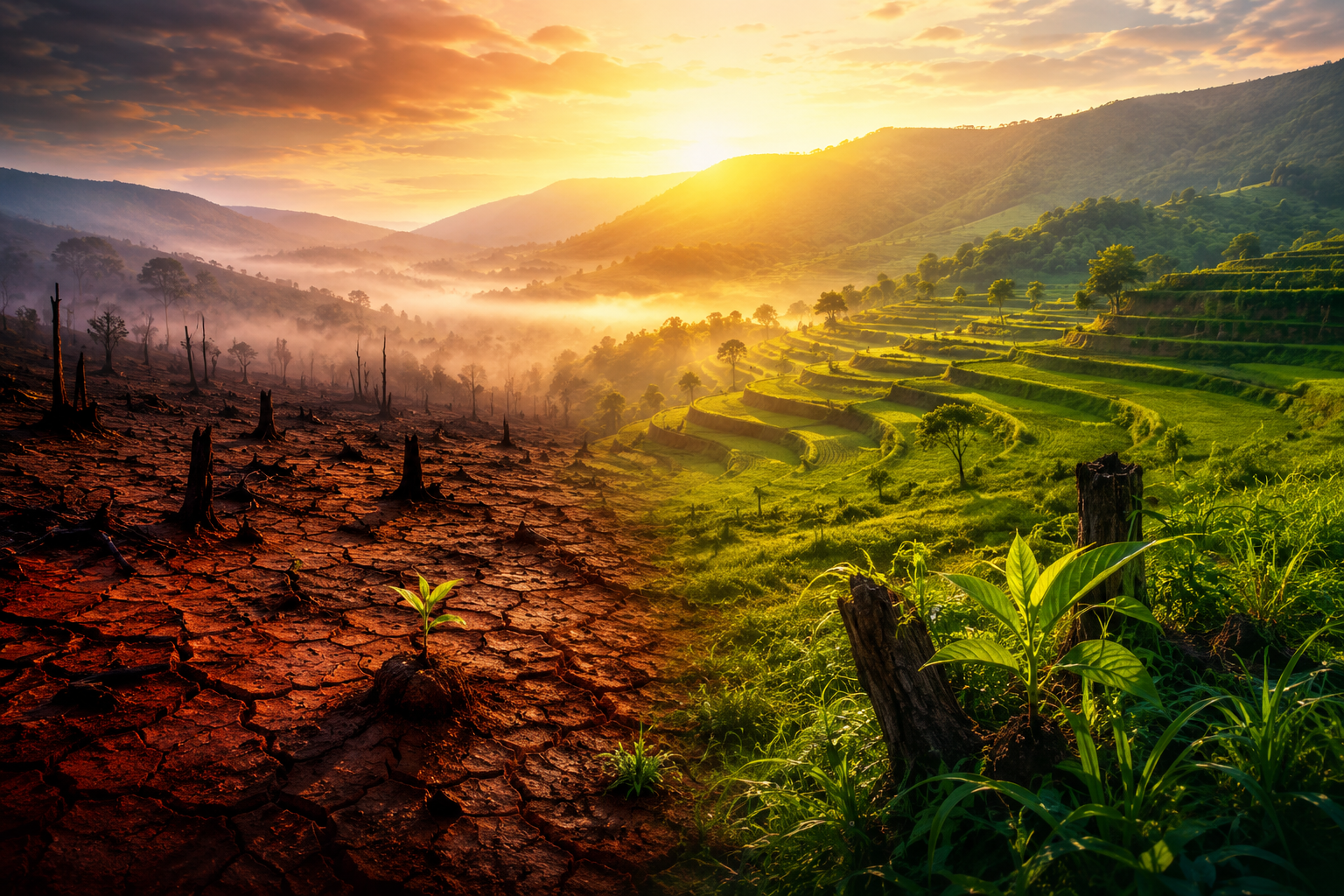
The land remembers the blood. But it also shows the rebuild.
When you zoom out on Rwanda’s story — from nearly a million people killed in about 100 days while the world looked the other way, to one of the cleanest, safest, most disciplined and open countries in the world — you can’t miss the pattern. This is what happens when a people decide: we will not be defined forever by what was done to us; we will be defined by how we respond.
Kindness, tenderheartedness, and forgiveness are not just church words; they become nation-shaping forces. Choosing not to avenge yourself, but allowing God to handle ultimate justice, makes room for peace instead of paranoia, order instead of chaos, a future instead of an endless replay of trauma.
Rwanda has not forgotten. The memorials are still there. The mass graves are still there. Survivors still carry their stories in their bodies, in their memories, in their tears.
But somewhere along the line, as a people, they said: We will tell the truth. We will pursue justice. And we will not live married to revenge.
That decision looks a lot like forgiveness — costly, disciplined, intentional forgiveness. Forgiveness that does not excuse evil, but refuses to let evil own the future.
So let me bring this from a nation to your life.
Some of us are living with our own “Rwanda 1994” on the inside. Betrayals that cut deep. Abuse that never should have happened. Abandonment, racism, injustice, systems and people that failed us while others looked the other way.
You may feel like your only options are to stay angry or to pretend it wasn’t that bad.
Rwanda’s story quietly introduces another option. You can tell the full, graphic truth about what happened. You can acknowledge the damage and, where possible, pursue real justice. And still choose not to let your whole identity be built around getting even.
Forgiveness is not saying, “It’s okay.” Forgiveness is saying, “It was evil, but it will not own my future.”
If a nation that saw more than 800,000 people murdered in about 100 days, while the world looked the other way, can move from genocide to safety, from rivers of blood to streets so clean the world notices, from abandonment to openness… What might God do with a heart, a family, a company, a community that finally says, “I release vengeance. I choose to forgive”?
Forgiveness will not change the numbers. It will not erase the scars. But it can absolutely change the trajectory.
Rwanda is proof that when forgiveness is chosen, God can breathe on ashes and turn a graveyard into a testimony.
If any of this resonates with you, click the like button and share with someone who you care about.